
Tips for creating, learning, and growing with analogue photography
Create your space
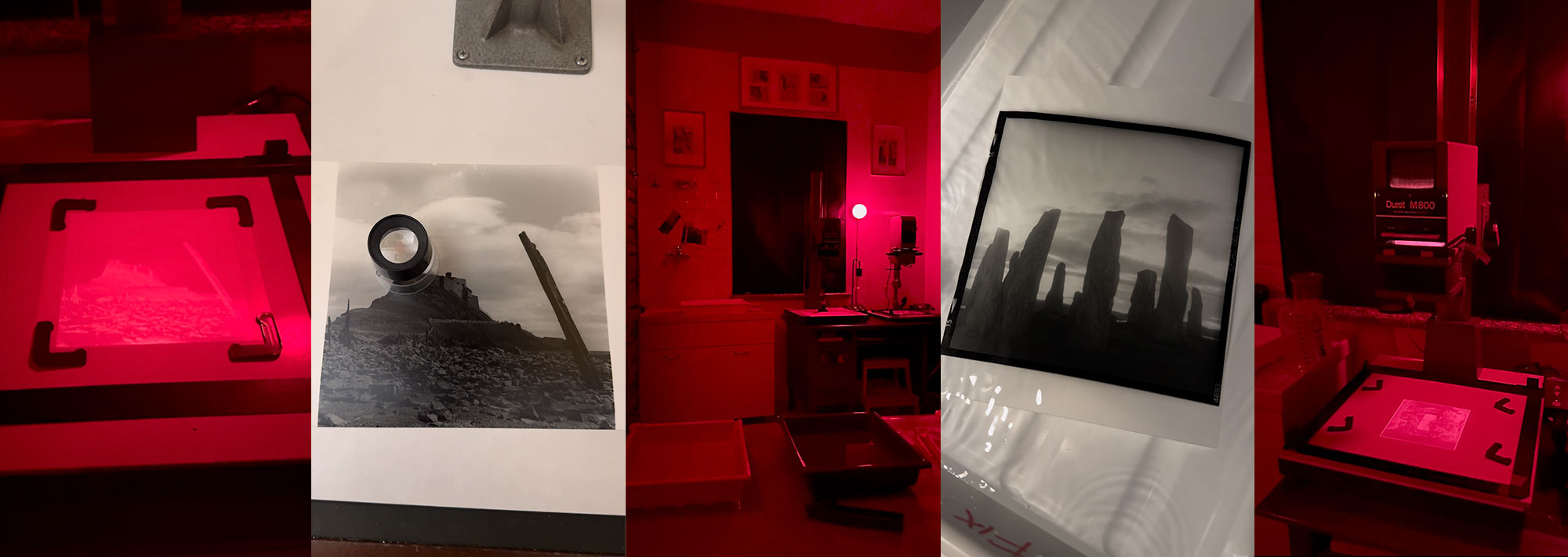
Creating a dedicated darkroom space is essential for successful darkroom printing. An improved environment reduces distractions and optimises your workflow. It allows you to focus on your craft. Make sure your space has proper ventilation, controlled lighting and access to all the necessary equipment. For example, I remember setting up my first darkroom, a room that used to be a box storage for old stuff that has been transformed to a very productive place.
By investing in a well-designed space you can promote creativity and efficiency, and make your darkroom sessions more enjoyable and productive.
Practice is the key
Practicing in the darkroom really makes it perfect. Regularly experimenting with different techniques, materials, and settings will help improve your skills over time. I remember the early printings, where many prints ended up in the trash, but each failure taught me valuable lessons that shaped my growth. When you dive into the process, you will develop a vision for composition and timing. Embrace the learning curve and you will find that your prints will reflect your evolving art.
Study
Studying darkroom printing techniques is essential to mastering this art form. Understanding the science behind the development and printing processes will improve your skills and results. I remember reading textbooks and online resources and taking different courses and workshops, and learnt about how various chemicals affect film and paper differently. Knowledge helps you experiment with confidence. This leads to unique and stunning prints. Taking time to study You are not only enhancing your technical abilities, but it also makes you appreciate the intricate beauty of analogue photography.
Read
Reading and learning from fellow photographers increases your understanding of darkroom printing and analogue photography. Engaging with books, articles, and online forums will expose you to a variety of perspectives and techniques. I am always inspired by famous photographers who share their darkroom experiences. By absorbing their knowledge, you can discover new ways to improve your practice. Exposure to the photography community not only fosters creativity, but it also creates connections that can lead to collaboration and valuable insights.
“The negative is comparable to the composer’s score and the print to its performance. Each performance differs in subtle ways.” – Ansel Adams
 Alessio Putzu Photography